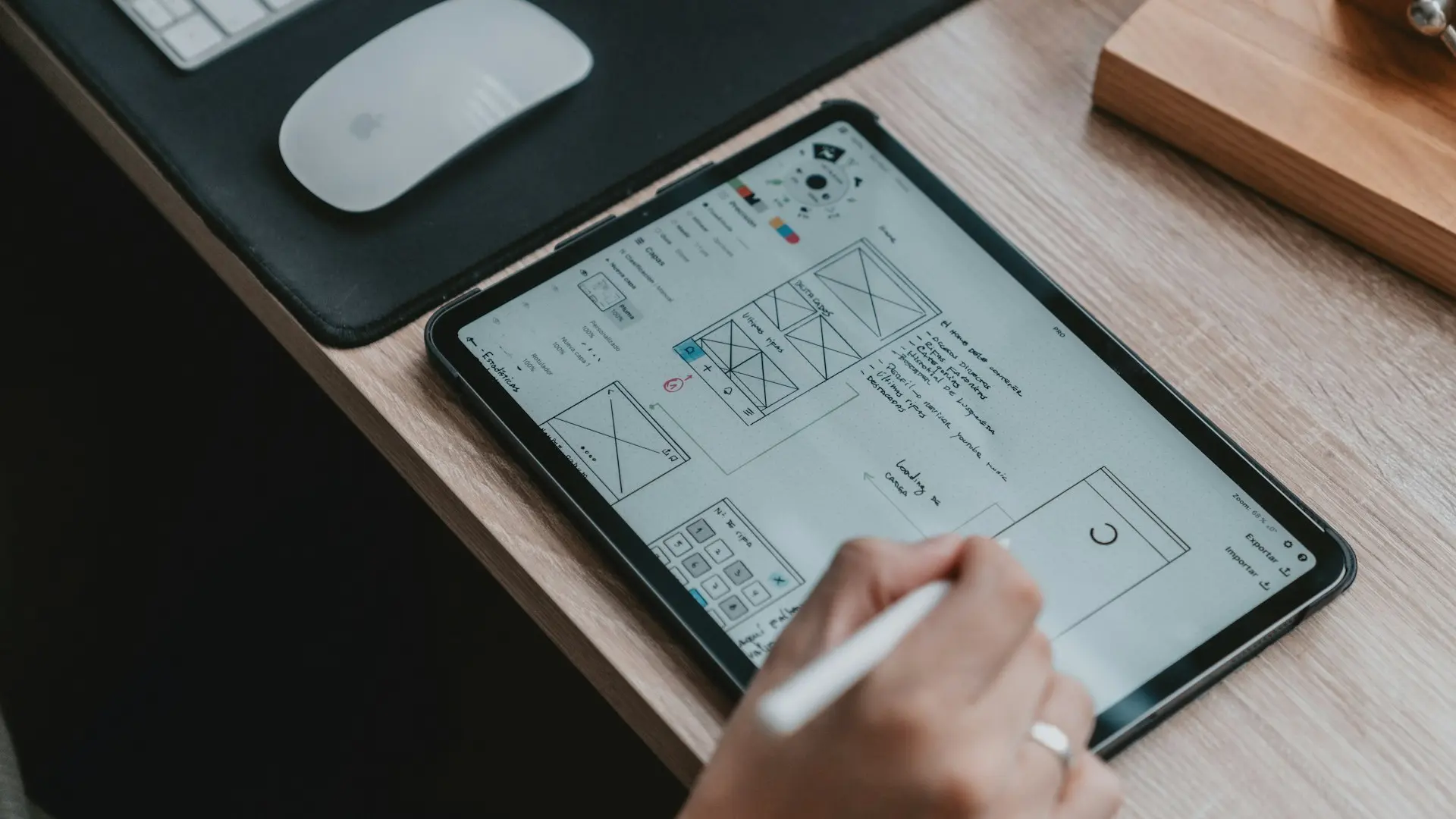
UI/UX Design That Converts Visitors into Customers
UI/UX Design at Webvello focuses on creating user experiences that combine usability, accessibility, and conversion optimization. We design interfaces that guide users toward business goals while ensuring every interaction is intuitive, fast, and accessible.
Our UX decisions are informed by user research, analytics data, and how design choices impact SEO performance and search visibility.
What Is UI/UX Design?
UI/UX Design combines User Interface (UI) and User Experience (UX) disciplines to create digital products that are both visually appealing and functionally effective. UI design focuses on visual elements—colors, typography, buttons, and layouts. UX design focuses on how users interact with these elements—navigation flow, information architecture, and task completion.
At Webvello, UI/UX Design means designing for measurable business outcomes. We combine usability testing, accessibility standards (WCAG 2.1), and conversion rate optimization to create interfaces that convert visitors into customers, load fast to support Core Web Vitals and SEO rankings, work for all users including those using assistive technologies, and support SEO goals through semantic HTML and mobile-first design.
UI/UX Design impacts search visibility because Google evaluates user experience signals including page speed, mobile usability, and engagement metrics (bounce rate, time on site). A well-designed interface keeps users engaged, reduces bounce rates, and improves rankings.
Who This Service Is For:
E-commerce businesses needing conversion-optimized product pages
SaaS companies requiring intuitive onboarding flows
Local businesses wanting mobile-friendly, accessible websites
B2B companies needing clear service presentation and lead capture
Any business where user experience directly impacts revenue
Comprehensive UI/UX Design Services
From research to implementation, we provide end-to-end design services that prioritize conversions, accessibility, and SEO performance.
User Research & Analysis
Understanding your target audience through surveys, interviews, persona development, and analytics review to inform design decisions.
Conversion Optimization
Strategic placement of CTAs, simplified forms, and user flow design that guides visitors toward business goals and conversions.
WCAG 2.1 Accessibility
Ensuring designs meet accessibility standards with proper color contrast, keyboard navigation, and screen reader compatibility.
Performance-Focused Design
Optimized layouts, efficient loading strategies, and design decisions that support Core Web Vitals and fast page speeds.
Mobile-First Responsive Design
Designs that work beautifully on all devices, starting with mobile screens and scaling up to desktop displays.
Data-Driven Decisions
Using analytics, user testing, and A/B testing insights to validate design choices and continuously improve performance.
How Does Webvello Approach UI/UX Design?
Webvello implements UI/UX Design through a four-step, research-driven process that prioritizes user needs, conversion goals, and technical performance.
Research & User Analysis
We begin by understanding your business goals, target audience, and user behavior through research, analytics review, competitive analysis, and accessibility audits.
Deliverables:
Information Architecture & Wireframing
We structure content and user flows to ensure intuitive navigation with site structure, user flow mapping, wireframes, and conversion path design.
Deliverables:
Visual Design & Prototyping
We create high-fidelity designs with visual design systems, accessible color schemes, interactive prototypes, and responsive layouts.
Deliverables:
Testing & Implementation
We validate designs with usability testing, accessibility testing, A/B testing strategy, developer collaboration, and performance monitoring.
Deliverables:
How UI/UX Design Impacts SEO and Business Outcomes
UI/UX Design directly influences search engine rankings, AI citations, and conversion rates through these key areas.
Core Web Vitals
Design impacts page speed (LCP), interactivity (FID), and visual stability (CLS)—all ranking factors.
Mobile Usability
Google uses mobile-first indexing. Mobile UX determines rankings for all devices.
User Engagement
Lower bounce rates and longer sessions signal content quality to search engines.
Semantic HTML
Accessible design uses semantic markup that search engines and AI understand better.
Conversion Rate Optimization
Well-designed experiences reduce friction and increase the percentage of converting visitors.
Answer Engine Optimization
Clear content structure helps AI cite your content in featured snippets and AI responses.
Why Accessibility and Performance Matter for Business
Accessibility and performance aren't just compliance requirements—they're business advantages that expand your audience and improve conversions.
Accessibility: 15% More Potential Customers
26% of adults in the US have some form of disability. Inaccessible websites exclude these users and violate the Americans with Disabilities Act (ADA), creating legal risk.
Webvello's Accessibility Standards:
Business Impact:
Larger addressable market • Reduced legal risk • Better SEO • Improved usability for all users
Performance: Every Second Costs Revenue
Amazon found that every 100ms delay costs 1% of revenue. Google found that 53% of mobile users abandon pages taking longer than 3 seconds to load.
Webvello's Performance Standards:
Business Impact:
Higher conversion rates • Improved SEO rankings • Better user satisfaction • Lower bounce rates
Frequently Asked Questions About UI/UX Design
Get answers to the most common questions about our UI/UX Design services.
What is UI/UX Design?
UI/UX Design combines User Interface (UI) and User Experience (UX) to create digital products that are visually appealing and functionally effective. UI design focuses on visual elements like colors, typography, and buttons. UX design focuses on how users interact with these elements through navigation flow, information architecture, and task completion. At Webvello, UI/UX Design means creating interfaces that drive conversions, meet accessibility standards, and support SEO performance.
How is UI/UX Design different from Web Development?
UI/UX Design focuses on planning user experiences, creating visual designs, and defining interaction patterns before any code is written. Web Development implements these designs into functional websites using programming languages like HTML, CSS, JavaScript, and frameworks like React. Design determines what the website should look like and how users should interact with it; development builds the working product. At Webvello, designers and developers collaborate closely to ensure designs are implemented accurately and perform well.
How does UI/UX Design impact SEO?
UI/UX Design impacts SEO through Core Web Vitals (page speed, interactivity, visual stability), mobile usability, user engagement metrics (bounce rate, time on site), and semantic HTML structure. Google evaluates user experience as a ranking factor—sites that load fast, work well on mobile devices, and keep users engaged rank higher. Good UX design reduces bounce rates and increases time on site, sending positive ranking signals to search engines. Webvello designs interfaces optimized for both user satisfaction and search engine visibility.
How does UI/UX Design affect conversion rates?
UI/UX Design affects conversion rates by reducing friction in conversion paths and strategically guiding users toward business goals. Well-designed interfaces use clear calls-to-action, intuitive navigation, simplified forms, and trust signals to make conversions easy. Poor UX—confusing navigation, hidden CTAs, complicated forms—creates obstacles that prevent conversions. Webvello applies conversion rate optimization principles during the design phase, creating interfaces that convert visitors into customers from day one.
What is the difference between UI Design and UX Design?
UI Design (User Interface) focuses on visual and interactive elements users see and click: colors, typography, buttons, icons, spacing, and layouts. UX Design (User Experience) focuses on the overall experience and user journey: information architecture, user flows, usability, accessibility, and how users accomplish goals. UI is about appearance; UX is about function. At Webvello, our designers handle both disciplines, ensuring visual designs support functional user experiences and business objectives.
Why is accessibility important in UI/UX Design?
Accessibility ensures your website works for all users, including the 26% of US adults with disabilities. Accessible design uses sufficient color contrast, keyboard navigation, screen reader compatibility, and clear labels. Beyond ethical and legal requirements (ADA compliance), accessibility expands your addressable market, improves SEO through semantic HTML, and enhances usability for all users. Webvello designs to WCAG 2.1 Level AA standards, ensuring your interface works for everyone while reducing legal risk.
How long does a UI/UX Design project take?
UI/UX Design timelines depend on project scope. A small website redesign (5-10 pages) typically takes 6-8 weeks. Medium projects (landing pages, e-commerce stores) take 8-12 weeks. Large projects (SaaS platforms, complex web applications) take 12-16 weeks or longer. Webvello's process includes research (1-2 weeks), information architecture and wireframing (1-2 weeks), visual design (2-3 weeks), and testing and iteration (2-3 weeks). We provide detailed timelines during project kickoff.
What deliverables do I receive from a UI/UX Design project?
Webvello provides comprehensive deliverables at each project phase: user personas and research findings, site maps and user flow diagrams, wireframes for key pages, high-fidelity mockups, interactive prototypes, design system documentation (colors, typography, components), responsive design specifications, accessibility compliance reports, and usability testing results. All design files are delivered in industry-standard formats (Figma, Adobe XD, Sketch) with organized layers and clear documentation for developer handoff.
How does Webvello ensure designs are accessible?
Webvello follows WCAG 2.1 Level AA accessibility standards throughout the design process. We ensure sufficient color contrast (4.5:1 ratio for text), keyboard-accessible navigation, screen reader-compatible semantic HTML, clear focus indicators, accessible forms with labels and error messages, and responsive designs that work with zoom and magnification. Before launch, we conduct accessibility audits using automated tools (WAVE, Axe) and manual testing with screen readers (NVDA, JAWS) and keyboard-only navigation.
Do you provide ongoing support after design implementation?
Yes, Webvello offers ongoing support through post-launch optimization packages. After implementation, we monitor user behavior through analytics, conduct usability testing to identify friction points, perform A/B testing on conversion elements, and make iterative improvements based on data. We also provide design system maintenance, ensuring new pages and features maintain visual consistency. Ongoing support packages are customized based on your needs and budget.
UI/UX Design Works Best with These Services
UI/UX Design delivers maximum impact when combined with complementary services.
Web Development
Turn designs into production-ready, performant websites built with React and Tailwind CSS
Learn MoreAI-Powered SEO
Ensure your well-designed interface ranks high in search results and drives organic traffic
Learn MoreTraditional SEO
Optimize technical SEO foundations that make your UX improvements visible to search engines
Learn MoreFrequently Asked Questions
What is the difference between UI and UX design?
UX (User Experience) design focuses on how a product works — user flows, information architecture, and interaction patterns. UI (User Interface) design focuses on how it looks — visual design, typography, color systems, and component styling. Both are essential: good UX with poor UI feels cheap, and beautiful UI with poor UX frustrates users.
What does a UX audit include?
A UX audit evaluates your website against usability heuristics, accessibility standards, and conversion best practices. It typically includes heuristic evaluation, user flow analysis, form and checkout review, mobile usability assessment, and accessibility compliance checking.
What is a design system?
A design system is a collection of reusable UI components, design tokens (colors, spacing, typography), and usage guidelines that ensure visual and functional consistency across your product. It accelerates development and reduces design debt.
How do you measure UX effectiveness?
UX effectiveness is measured through quantitative metrics (task completion rates, time-on-task, error rates, conversion rates) and qualitative methods (usability testing, user interviews, satisfaction surveys). We establish baselines before redesign and track improvements after.
Why does accessibility matter for UX?
Accessible design ensures your product works for users with disabilities. Beyond legal compliance (ADA, WCAG), accessibility improvements benefit all users: better contrast helps in bright sunlight, keyboard navigation helps power users, and clear labeling reduces confusion for everyone.
Ready to Improve Your User Experience?
Webvello's UX audit evaluates your current interface against conversion best practices, accessibility standards, and SEO performance. We identify friction points preventing conversions and provide actionable recommendations for improvement.
What You'll Receive:
Free consultation • No pressure • Clear pricing